News and Media
The 10 fundamentals of learning environment design
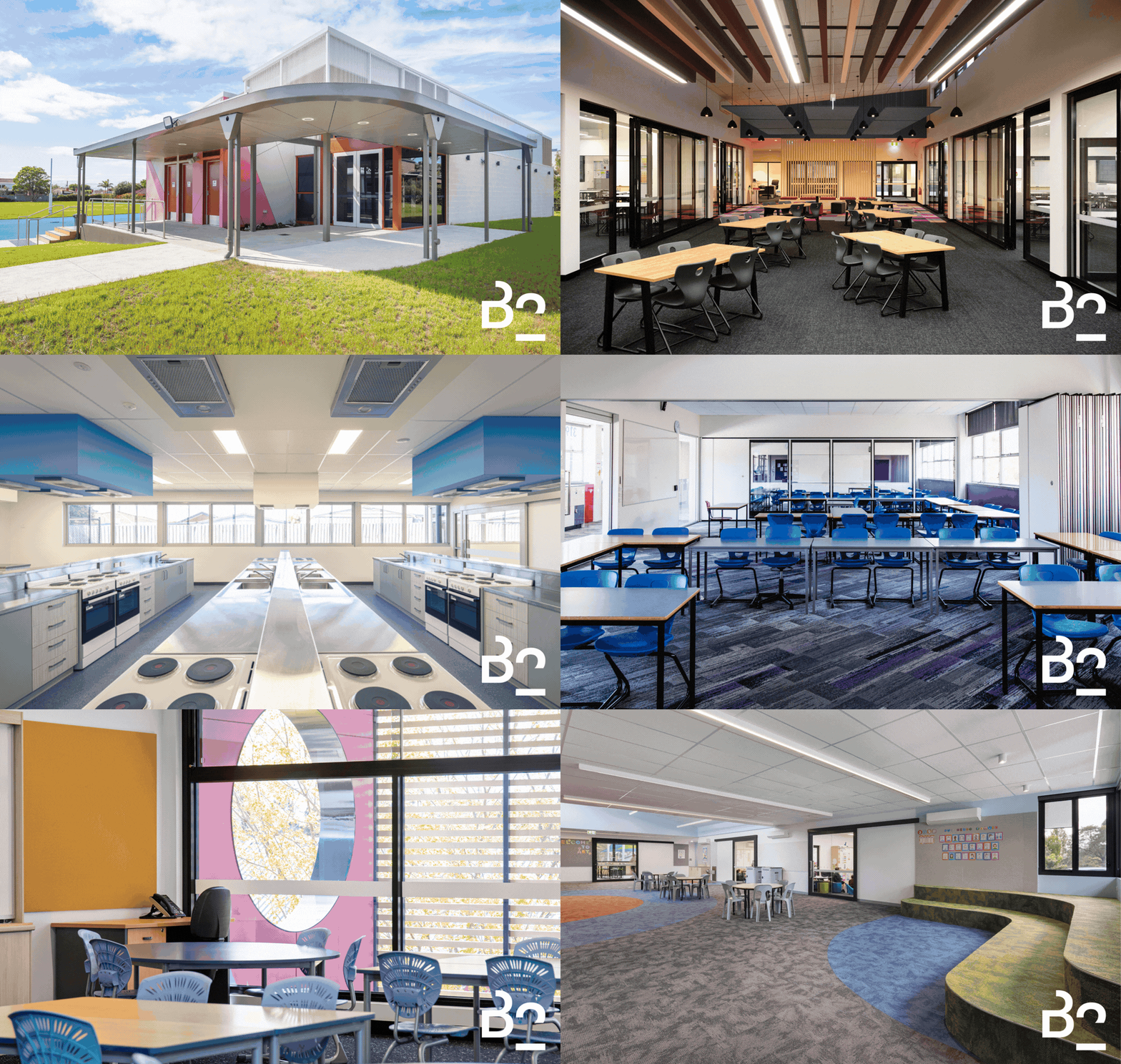
Educators need learning environments that help students engage, focus, behave and work effectively. Places that feel inclusive, welcoming and genuinely support wellbeing. And that empower teachers to do what they do best – teach.
As an Accredited Learning Environment Planner, Brent Tullio, B2 Architecture’s Director, and his team have partnered with hundreds of schools over the last three decades to design learning environments that support and empower students and educators.
In his experience, the best have ten things in common:
1. Flexibility
On any given day, a learning environment needs to cater to a variety of learning modalities – from explicit teaching to independent, collaborative and hands-on learning activities… and sometimes all at once. Flexibility makes this possible.
2. Adaptability
Beyond day-to-day flexibility, learning environments need to be adaptable so that they can be reconfigured or repurposed without significant investment or disruption, as pedagogy, curriculum or needs change.
2. Natural light
Natural light improves concentration, enhances our ability to focus, elevates our mood, regulates our emotions and reduces the need for artificial light. In learning environments, this improves learning outcomes, supports wellbeing and reduces energy consumption.
4. Clear sightlines
Clear sightlines that maximise visibility ensure educators can effectively supervise and monitor students across learning spaces and zones without undermining their sense of independence and autonomy.
5. Safety and security
Learning environments must be safe and secure. They also need to feel safe and secure – because security is physical, emotional and psychological. The design of a space and its materials, textures and visual cues shape emotions and create a sense of safety.
6. Connectivity
Students and educators must be able to move between spaces and access digital resources with ease and efficiency. Spatial planning that optimises flow, movement and transitions and technical infrastructure that allows multiple devices to be powered almost anywhere, are non-negotiable.
7. Zoning
Activity zones that support collaboration, instruction, creativity, independent learning, quiet time and reflection help students focus, self-regulate, engage and behave appropriately – reducing distractions and making it easier for educators to educate.
8. Connection to nature
Feeling connected to nature, whether visually or physically, improves concentration, cognitive performance, mood and helps us regulate our emotions. Learning environments that provide this connection enhance learning outcomes and improve wellbeing.
9. Visual Cues
Colour, materials, textures, shapes, forms, symbols and spatial cues help students understand what is appropriate and expected of them – putting them at ease, reducing the cognitive load and helping them behave appropriately.
10. Acoustics
Good acoustics are another non-negotiable. To learn effectively, focus, and work productively, students must be able to hear instructions and not be distracted by noise and activity from adjoining spaces.
Want to know more about learning environment design? Contact B2 Architecture.
Successfully delivering 500+ projects over the last three decades, B2 Architecture’s expertise and experience span all facets of education architecture – from Master Planning to the refurbishment and development of learning centres, gyms and sporting facilities, auditoriums, new campuses and everything in between.
Talk to: Brent Tullio, Director, +61394294255, practice@b2architecture.com.au
Visit: B2architecture.com.au View: Portfolio & Capabilities
Connect: Instagram | Facebook | LinkedIn